


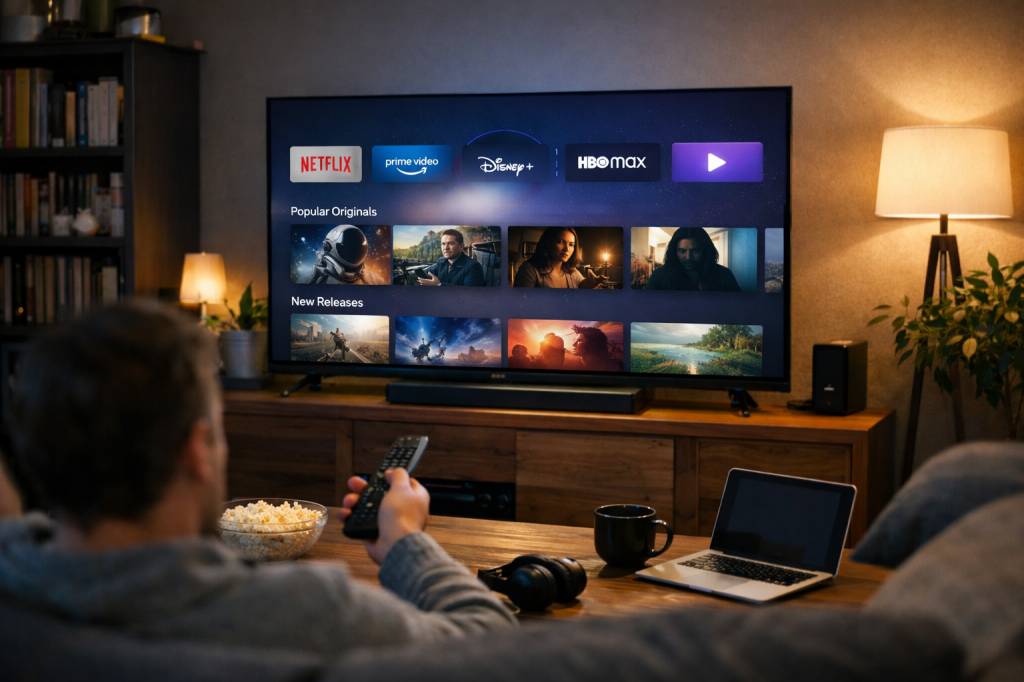
Netflix, Disney+, Prime Video, HBO Max… just when we thought the streaming landscape had stabilized, a new wave is quietly rewriting the rules. Platforms like Nebula, Curiosity Stream, or even YouTube-native services are pushing a very different model: smaller, more focused, less algorithm-obsessed, and sometimes surprisingly human.
We’re moving from the era of “one platform to rule them all” to a fragmented ecosystem where your next favorite streaming service might be built by… a physics YouTuber or a team of documentary nerds.
So what exactly is changing, and what does this “next wave” of streaming look like in practice?
From binge culture to “smart streaming”
For a decade, streaming has been synonymous with binge-watching. The KPIs were clear: watch time, retention, subscriptions. Platforms like Netflix built entire content strategies around keeping you online as long as possible, even if that meant serving you the 7th show you “might like” at 2:00 a.m.
The emerging platforms are trying a different bet: less content, more intention.
Take Nebula, often described as the “streaming service built by creators.” No autoplay hell, no aggressive recommendations. Instead, curated content from established YouTubers (educational, tech, philosophy, science), plus originals that wouldn’t survive in the traditional algorithm economy: long-form essays, deep dives, niche series.
Same shift with Curiosity Stream: a streaming platform focused only on documentaries and factual content. No sitcoms, no blockbusters. You don’t open it to “pass time”, you open it to learn something.
This is the first key trend: the move from passive viewing to “smart streaming”, where value is not in how long you watch, but in what you get out of it.
Why the “giants” model is hitting a wall
The big platforms aren’t going anywhere, but their model is visibly cracking around the edges.
Three main friction points are pushing users to look elsewhere:
- Subscription fatigue: Between Netflix, Disney+, Prime, Apple TV+, HBO, and local offerings, the monthly bill creeps up fast. Many users now rotate subscriptions or cancel for months at a time.
- Content overload: Thousands of titles, yet the same question every night: “There’s nothing to watch.” A paradox largely caused by decision fatigue and average-quality catalog padding.
- Rising prices + ads: Paying more… for ad-supported tiers. The original promise of streaming (“pay to avoid ads”) is slowly being inverted.
In contrast, smaller platforms often play the opposite game:
- Lower prices or lifetime deals.
- Fewer but better-curated titles.
- Crystal-clear editorial identity: “We do this, not everything.”
The result: users feel less trapped in an endless scroll and more like they’re entering a digital “place” with a purpose.
Nebula: a case study in creator-powered streaming
Nebula is often cited because it embodies many of the shifts happening right now.
Originally built around a group of YouTube creators (philosophy, tech, science, history, media analysis), the platform is structured very differently from traditional streamers:
- Built with creators, not just “featuring” them: Creators are stakeholders. They help define the roadmap, test features, and push formats that don’t work on ad-driven YouTube.
- No algorithm chasing: Videos don’t have to be optimized for clickbait thumbnails or 8-minute formats. A 90-minute video essay can exist simply because it’s good.
- Hybrid monetization: Subscription revenue is shared, but Nebula is often bundled with educational platforms (like some online learning services), creating a different economic balance.
This is a quiet but powerful shift: for once, the platform isn’t trying to extract maximum value from creators, but to build value with them. For viewers, that means fewer compromises: less interruption, more depth, less noise.
Is Nebula going to be “the next Netflix”? Probably not, and that’s not the point. It’s the opposite: a deliberate move away from the Netflix logic, embracing niche over mass appeal.
The rise of niche streaming: from food to philosophy
The future of streaming is not one mega-platform, but a constellation of smaller, specialized services. A few segments are already gaining momentum:
- Edu-streaming: Nebula, Curiosity Stream, Wondrium. Platforms focused on documentary, lectures, explainers, and long-form education.
- Genre-specific services: Shudder (horror), Crunchyroll (anime), Mubi (arthouse cinema), Criterion Channel (classic & auteur films). Highly curated, with strong editorial voices.
- Creator ecosystems: Patreon-exclusive video feeds, paid Discord servers with live streams, Substack podcasts with video extensions.
- Ultra-niche verticals: Cooking, design, coding, AI, productivity, fitness — often delivered via apps or hybrid platforms rather than “classic” streaming brands.
This specialization is not a bug, it’s a feature. It matches how we actually consume content today:
- Netflix for entertainment.
- YouTube for tutorials.
- TikTok for quick hits.
- Niche services for passions and serious learning.
Instead of trying to be everywhere, the next wave platforms try to be the best at something very specific.
AI enters the chat: smarter discovery, not just more content
Artificial intelligence is often sold as a content factory: “Click a button, generate a show.” In reality, the more interesting applications for streaming sit elsewhere.
Here’s where AI is already shifting the game:
- Hyper-personalized discovery: Moving from “Because you watched X” to “Here’s a 3-video path to understand quantum computing, tailored to your level and time budget.”
- Dynamic summarization: AI-generated summaries, transcripts, chaptering, and key moments. Great for educational and documentary platforms, where you might want to jump straight to a concept.
- Smart accessibility: Better subtitles, dubs, sign-language overlays, and even on-the-fly content adaptation for different audiences or languages.
- Contextual recommendations: Instead of recommending “more of the same”, AI can suggest complementary content: watch a film, then get a short explainer on the real history behind it.
The difference with the first wave of streaming algorithms is subtle but important. Instead of optimizing solely for time spent, next-generation platforms can optimize for:
- Understanding gained.
- Skills acquired.
- Satisfaction after viewing (via explicit feedback).
For a user, that changes the relationship with the platform: less like a casino, more like a smart, patient librarian.
Business models under pressure: subscription, hybrid, or something else?
The all-you-can-watch subscription has a simple problem: costs scale faster than revenue. To retain users, you need fresh content; fresh content is expensive; so prices go up, and the race continues.
The new wave experiments with alternatives:
- Lower-cost, focused subscriptions: Instead of €15/month for “everything”, you pay €3–€6 for a tightly curated service that you actually use.
- Creator-backed bundles: You subscribe to a creator or a group of creators, and the platform is just infrastructure. Think Nebula-style bundles, or Patreon with video hosting and streaming-like UX.
- Educational funding: Some platforms partner with universities, companies, or training budgets. In that case, you’re not the only one paying for access.
- Ownership or lifetime access: One-time payments for courses or collections, integrated within streaming-like interfaces but economically closer to “buying” content than renting it.
Will this completely replace the Netflix model? No. But it will coexist with it, giving users more flexibility and letting niche platforms survive without chasing hundreds of millions of subscribers.
What this means for creators: more control, more risk
For digital creators, this shift is both an opportunity and a headache.
On one hand, diversified streaming ecosystems mean:
- Less dependence on one algorithm (hello YouTube).
- Possibility to produce content too niche, too long, or too “unprofitable” for ad-funded platforms.
- Better monetization models: revenue shares, licensing deals, bundled offers.
On the other hand:
- Audiences get scattered across platforms.
- Managing multiple spaces (YouTube, Nebula, Patreon, podcasts, newsletters) can become a job in itself.
- There’s no guarantee that a niche platform will survive long term.
The creators who will benefit most are those who treat streaming platforms not as monolithic “homes”, but as distribution layers. They build a strong identity, keep ownership of their audience (email lists, communities), and plug into various platforms strategically.
As a viewer: how to navigate the new streaming maze
So what do you do, practically, in this new ecosystem where Netflix coexists with half a dozen specialized services? A few pragmatic strategies can help you keep your budget — and your attention — under control:
- Rotate subscriptions: Instead of keeping 5 platforms all year, choose 1 or 2 “core” services and rotate the rest month by month. Binge what you want, then cancel.
- Identify your “utility” platforms: Which services teach you something, help you in your work, or truly inspire you? These are usually worth keeping over platforms you open “just because”.
- Test niche services during free trials: Many specialized platforms offer 7–30 day trials. Use them intentionally: plan a watchlist, try different formats, then decide if it earns a permanent slot.
- Bundle where it makes sense: Some services come included with others (Prime Video with Amazon Prime, or smaller platforms bundled with learning apps). Check what you’re already paying for before adding a new subscription.
The key question to ask yourself is no longer “What am I missing out on?”, but “What am I actually using, and what value am I getting from it?”
Trends to watch in the next 3–5 years
Looking ahead, a few strong signals suggest where streaming is heading.
- More creator-led platforms: The Nebula playbook — creators co-owning their platform — will likely expand, including in non-English markets.
- Integration with learning & productivity: We’ll see streaming blended with courses, note-taking, quizzes, and community features. “Watch & forget” will compete with “watch & apply”.
- Regional and language-specific services: Local platforms with strong cultural identity and local originals, especially outside the US/Europe axis.
- AI-native experiences: Interactive documentaries, branching narratives, or even “ask-the-video” interfaces where you query content like you’d query a chatbot.
- Regulation and transparency: As algorithms decide more of what we watch, pressure will grow for explainable recommendations and data usage clarity.
Underneath all these changes, there’s a constant: our time is finite. The real competition isn’t just between platforms, but between everything that can capture a slice of our attention — social feeds, games, podcasts, short-form videos, live streams.
From endless scrolling to intentional watching
The era of “just one more episode” generated impressive subscriber charts, but also a certain streaming fatigue. The next wave, from Netflix to Nebula and beyond, seems to be quietly pushing in another direction: less volume, more intention; fewer platforms, better chosen.
Will this transform the economic model of the entire industry overnight? No. But it already changes how we, as users, approach the question: not “Which platform has everything?”, but “Which combination of services truly deserves my time — and my money?”
If the first decade of streaming was about putting the world’s content online, the next one might be about making that content actually matter. And that’s a shift worth watching very closely.
— Lili Moreau