








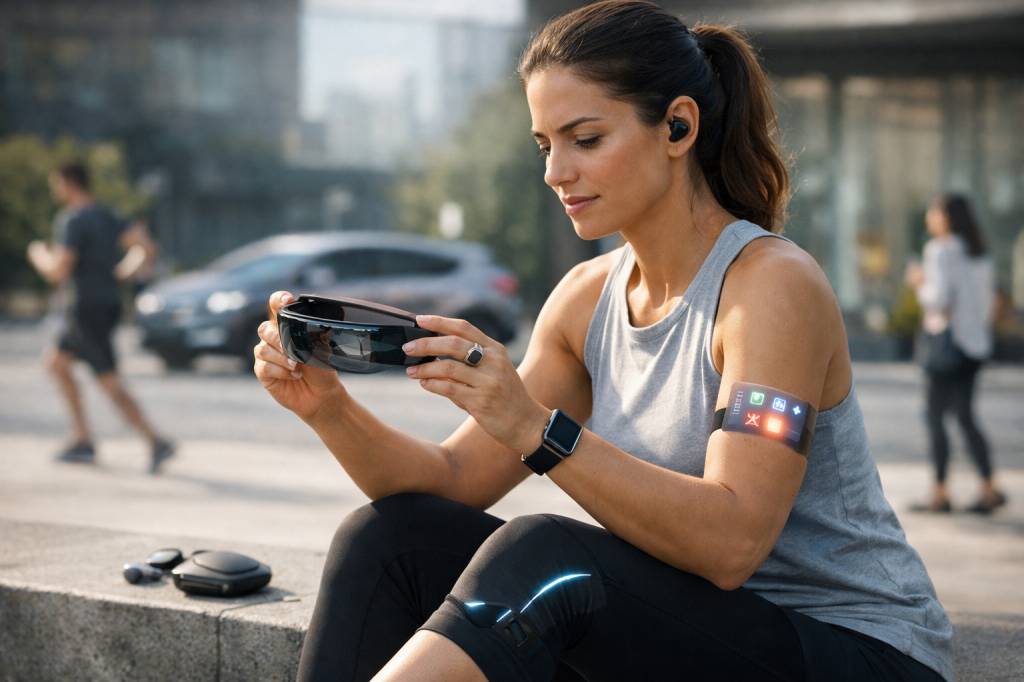
Smartwatches had their glory moment. Step counters, notifications on the wrist, heart rate at a glance… We got used to them so quickly that they now feel almost boring. The real question is: what comes next? Because wearable tech is clearly not stopping at your wrist.
The future of wearables is moving under the skin, into our clothes, around our eyes and even… into our beds. It’s less about showing off a gadget and more about making technology so integrated that it almost disappears.
Let’s explore what’s coming after the smartwatch, what’s already quietly hitting the market, and what’s still in the lab—but closer than you think.
From “nice to have” to “invisible infrastructure”
Wearables started as accessories: fitness bracelets, smart rings, AR glasses nobody wanted to wear in public. The next wave is different. It’s not about extra features; it’s about infrastructure—continuous data, tailored health insights, smarter environments.
Three big shifts are driving this evolution:
- Miniaturization: Sensors keep shrinking while gaining precision. Today’s medical-grade ECG can fit into a ring.
- Battery innovation: Flexible, textile-based and energy-harvesting batteries are moving from prototypes to products.
- AI on-device: Your data can now be processed locally, making wearables faster, more private and more context-aware.
In other words, the future wearable is not a “thing you put on” but something that blends into what you already wear or do—your clothes, your glasses, your shoes, your sleep routine.
Smart rings: the quiet takeover of your biometrics
If smartwatches are loud and obvious, smart rings are their discreet, efficient cousins. They’re already here, and they’re getting serious traction.
Devices like Oura Ring, Circular Ring or Ultrahuman Ring Air offer:
- Continuous heart rate and heart rate variability (HRV) tracking
- Sleep phase analysis and readiness scores
- Body temperature variation for illness or cycle tracking
Why are rings so promising?
- Better signal: Fingers are packed with capillaries, which improves sensor accuracy compared to the wrist.
- More wearable: Many users stop wearing smartwatches at night or during formal events. Rings can stay on 24/7.
- Battery life: Up to a week of usage is common, compared to 1–2 days for some smartwatches.
And this is only phase one. Expect rings to start doing more than just monitoring:
- Gesture-based control for smart homes (lights off, music volume up, with a twist of the hand)
- Secure authentication in place of passwords or cards
- Early warning systems for stress, burnout or cardiac anomalies
The ring is becoming a quiet biometric hub, one that doesn’t scream “I’m a gadget person” yet knows more about you than your doctor sees in a yearly visit.
Smart clothing: sensors woven into your routine
Wearable tech is moving into fabrics—and this is where things get really interesting.
Smart clothing isn’t a hypothetical concept anymore. We’re seeing:
- Sports apparel with integrated ECG and breathing sensors, like Hexoskin or Polar’s sensor-embedded shirts.
- Posture-correcting shirts that vibrate when you slouch, targeting remote workers stuck at their desks.
- Smart socks for runners, measuring pressure, stride, foot strike and fatigue.
The advantage is obvious: no extra device to remember. If you’re already putting on a shirt, why not let it track your heart rate or your breathing in the background?
The next frontier is “ambient clothing” that adjusts itself:
- Fabrics that open or close micro-vents depending on your body temperature
- Compression clothes that adapt in real time to assist recovery after effort
- Workwear that detects exposure to toxins or extreme heat for industrial workers
The challenge? Durability and maintenance. Nobody wants to “hand-wash gently with a microfiber cloth and special charger” every T-shirt. The brands that will win are those that make smart clothes as robust and low-maintenance as your current wardrobe.
Hearables: earbuds that know you better than your phone
Earbuds are already glued to many people’s ears half the day. Turning them into health and context sensors is a logical next step.
We’re already seeing:
- Heart rate monitoring via in-ear sensors
- Real-time fitness coaching during workouts
- Adaptive noise control based on your environment
But the potential goes much further:
- Mental health insights: Continuous audio and physiological monitoring could detect early signs of stress, anxiety or burnout through voice changes, breathing patterns or usage patterns.
- Context-aware assistance: Your earbuds could detect that you’re in a noisy street and automatically highlight navigation cues or warning sounds.
- Fine-grained biometrics: The ear canal is an excellent spot for temperature and blood flow measurement, opening the door to clinical-grade data.
As AI-powered audio interfaces improve, hearables could easily become the primary way we interact with our digital ecosystems, sidelining the smartphone screen in many scenarios.
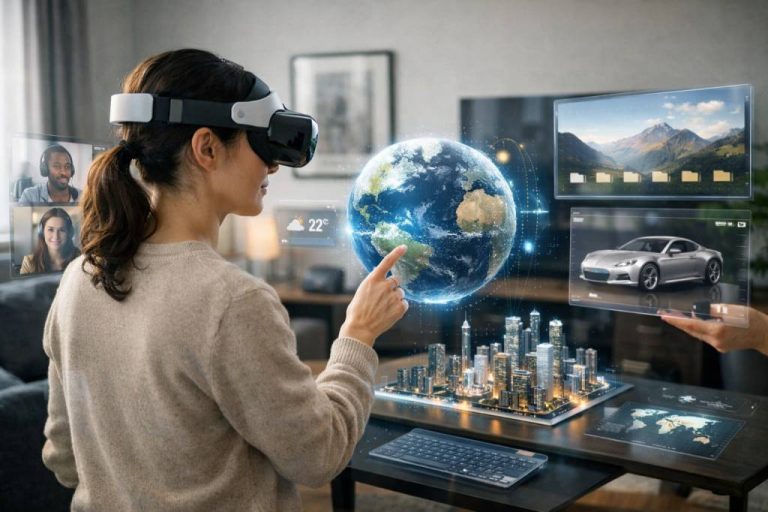
AR glasses: waiting for their iPhone moment
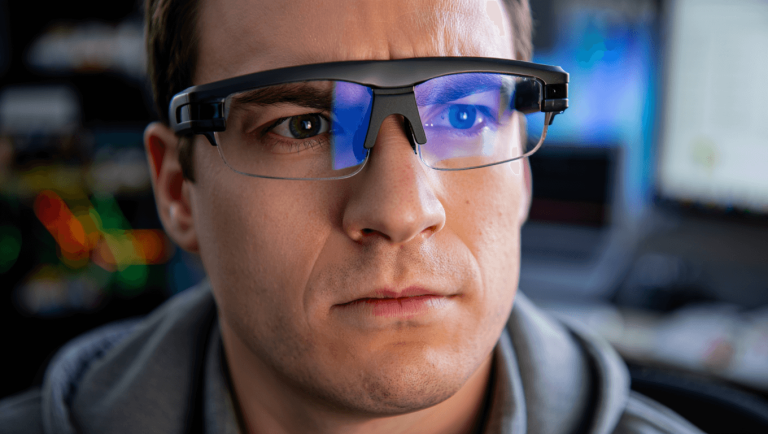
Smart glasses had a messy start—Google Glass, anyone? But the concept is far from dead. It’s just maturing quietly while the hardware catches up with the vision.
We’re now seeing a split between:
- Light “notification” glasses like Ray-Ban Meta that integrate cameras, microphones and basic overlays.
- High-end AR headsets for professionals, such as Microsoft HoloLens or Magic Leap, used in training, maintenance or industrial environments.
The real breakthrough will happen when we reach three key milestones:
- All-day battery life in a normal-looking frame
- High-quality, non-intrusive displays
- Seamless voice and gesture interfaces
Imagine walking through a supermarket while your glasses highlight products that match your dietary preferences, or working on a real object with live instructions overlaid in your field of view. No phone in your hand, no smartwatch to look at—just information naturally integrated into your reality.
We’re not there yet for mass adoption, but AR glasses are clearly on the “when”, not “if” trajectory.
Implantables and health-grade wearables: beyond consumer gadgets
When we talk about the future of wearables, we inevitably touch on a more sensitive topic: tech that goes under the skin.
Some implantables are already mainstream in medicine:
- Cardiac pacemakers and defibrillators
- Continuous glucose monitors for diabetics
- Cochlear implants restoring hearing
What’s changing is the bridge between medical devices and consumer wearables.
We’re seeing the rise of:
- Medical-grade patches that track heart rhythm or respiration over days, with clinical accuracy.
- Long-term sensors that monitor internal biomarkers and send preventative alerts before symptoms appear.
- Neural interfaces (still experimental) that could assist with paralysis, prosthetics or even human–computer interaction.
The ethical stakes are huge: Who owns the data? Who can access it? What happens if an insurer can see your cardiac anomalies before you even feel anything?
The line between “cool quantified self gadget” and “continuous medical surveillance” is getting thinner, and regulation will have to keep up.
From data overload to meaningful insights
Let’s be honest: most people don’t need another dashboard of pretty graphs. They need simple, actionable feedback.
The future of wearable tech will not be decided by “who has the most sensors” but by “who makes the data actually useful”.
Expect a strong move from raw metrics to structured outputs:
- “You’re 20% more recovered today than yesterday, postpone intense training.”
- “Your sleep quality dropped for 5 consecutive nights; here are two habits you can adjust.”
- “Your stress pattern over the past month suggests you’re at risk of burnout; consider these changes and talk to a professional.”
AI is central here. Not as a buzzword, but as a practical layer turning messy physiological data into personalized advice—ideally without sending all your intimate metrics to a distant server.
We’ll also see more cross-device intelligence: your ring, earbuds, smart clothes and phone collaborating to build a single, coherent picture instead of five fragmented apps.
Wearables and the workplace: productivity, safety… and surveillance?
One area that will quietly accelerate adoption is the workplace. Companies already use wearables for:
- Tracking physical strain and preventing injuries in warehouses
- Assisting field technicians with AR instructions
- Monitoring fatigue in drivers or machine operators
Done right, this can be a win-win for safety and efficiency. Done wrong, it turns into hyper-surveillance of employees’ every heartbeat and gesture.
Key questions that will shape adoption:
- Is biometric tracking voluntary or mandatory?
- Is data anonymized, and at what level?
- Can employees access and control their own data?
Wearables at work will force organizations to clarify their stance on digital ethics much faster than any email policy ever did.
Privacy, trust and the “creepiness” threshold
You don’t need to be paranoid to feel slightly uneasy about devices that know when you sleep, when you’re stressed, when you might be getting sick, and where you are at all times.
The adoption of next-gen wearable tech will depend on three non-negotiable pillars:
- Radical transparency: Clear, human-readable explanations of what is collected, why, and how it’s used.
- Local processing by default: More computation done on the device itself, less raw data sent to the cloud.
- User control: Granular permissions, easy deletion, and the ability to opt out without losing the device’s core functionality.
If manufacturers ignore these points, users will do what they always do: disable features, hack around limitations, or abandon the product entirely.
The “creepiness” threshold is very real. Just because something is technically possible doesn’t mean it will be socially acceptable.
What does this mean for you, today?
All this sounds futuristic, but change is already in motion. If you’re curious—and a bit strategic—you don’t need to wait five years to get value from this wave.
Here are a few practical ways to position yourself:
- Choose ecosystems, not isolated gadgets. When you test a wearable, look at the long-term: Does it integrate with your health records, your training tools, your day-to-day workflow?
- Start with one key use case. Sleep optimization, injury prevention, focus management at work—pick a problem and evaluate wearables based on how clearly they help you solve it.
- Audit your data comfort zone. Decide what you’re okay sharing (and with whom) before you’re presented with a 30-page terms-of-service wall.
- Watch smart textiles and rings. If you want a taste of “post-smartwatch wearables” today, these are the segments moving fastest.
The future of wearable tech isn’t about having more screens on more body parts. It’s about making technology fade just enough so that you can focus on living, while your devices quietly work in the background to keep you healthier, safer and more efficient.
The next time you look at your smartwatch and feel like it’s just buzzing for another notification you didn’t ask for, remember: it’s probably not the endpoint of wearable tech. It’s just chapter one.
— Lili Moreau